Showing posts with label Graphic Novel. Show all posts

Wednesday, May 16, 2012

The Complete Maus (1991*)

     I am going to come right out and say it: I was expecting more from The Complete Maus (1991).  I was expecting a riveting telling of the personal trials and travails of Vladek Spiegelman during WWII and the Holocaust.  I also thought that the artwork would contribute to the story.  I don't think I either happened.  Art Spiegelman has trouble telling his parents' story because – and this is most explicit – he really has no affection (beyond familiarity) for his father, Vladek.  Since Anja, Art's mother, died well before he decided to take on the project, she could not be any help.
     Unfortunately, it seems that Speigelman was more than willing to settle for depicting his struggle to understand his father's struggles and life rather than actually understanding it.  As Vladek is, almost universally, depicted as a miserly asshole, it is hard to imagine why Spiegelman would turn to him for the story.  There were – we are told – many other survivors of Auschwitz in the neighborhood and amongst his fathers friends.  Surely these people would be able to give a better account of what actually happened.
     But maybe Spiegelman had no real interest in the reality of the experiences of Auschwitz or the invasion of Poland.  Maybe the entire exercise is one of trying to reconcile the shadowy understanding he had of his emotionally battered parents when he was a child with the account his father could give him as an adult.  Even so, I feel that Maus fails here as well.  Spiegelman spends much of his time wallowing in his frustrations in dealing with his father rather than showing any level of understanding.
     Now, I will admit that I am coming very late to Maus.  There has been much media about the Holocaust since Spiegelman started the project, so I am sure that I am unfairly prejudiced in expecting it to build upon material that came after it.  At the same time, there doesn't seem to be a compelling narrative to the story; Spiegelman is trading on the horrors his parents endured and survived without giving them a proper representation.
     Worst (for me), I felt that the style detracted from the story.  The choice to have the different races represented as different animals feels small minded and prejudicial rather than revealing. Polish pigs, German cats (Katzen?), French frogs, and Jewish mice may be easy to identify (actually, the cats aren't except for the fact they don't look like the other creatures).  All of the depictions are static in the extreme, even when Spiegelman tries to impart action or movement.  It looks and feels cold and impersonal, which is certainly not the intended effect (though it may be how Spiegelman felt while working through this).
     Now, this is not to say that I didn't find Maus worthwhile.  It is, but it certainly doesn't seem – 20+ years later – groundbreaking or exceptional.  It is too happily self-referential.  Ultimately, I think that it does little to illuminate anything about the survivors other than that they can be assholes or emotionally ruined in other ways as well as being survivors.

Monday, April 9, 2012

Dark Empire (1995) & Dark Empire II (1995)

     If there is a lesson to be learned from good fantasy or science fiction properties, it is to get the story told in a timely manner and then get the hell out.  Loitering around, manufacturing what amounts to more of the same is both frustrating and disappointing.  Yes, the first Star Wars (1977) film begged for more exploration of its universe and deeper story, but what was has been churned out instead have been attempts to advance the story in not very exciting or interesting ways.
     In Star Wars: Dark Empire (1995), set some amount of years – and a few novels – after the events of Return of the Jedi (1983), the familiar characters come back and revisit places they have been before.  And by characters coming back, I mean from the dead.  Or supposedly dead.  But sometimes from the verified dead, and then from the verified dead again.  Even worse, the idea is put forward that the Dark Side is something that can be portioned out and assigned to certain loyal Imperial troopers.  That may have made sense to me when I was five – around the time The Empire Strikes Back (1981) came out – but it is just downright offensive to me in my supposed adulthood.
    Maybe I can get used to the same characters being brought back to essentially do the same thing – Han to fly the Falcon around and act all roguish, Luke to be all solemn and Jedi-y, Leia relegated to being a plot device or a way to wedge exposition into the story, Lando to fail at doing good things, etc. – but I am not going to be happy with it.  If it is enough to cause me to walk away from ElfQuest (1978-2006, I guess) and not follow the continuing adventures of Farscape (1999-2003), it is certainly enough to make me disinterested in the Star Wars graphic novels.
     I guess I would have been more involved in the story – most of which I knew because the people with whom I played the Star Wars RPG (we played the 1992/1996 Second Edition of the West End Games version) were kind enough to boil it down to its bare bones and keep me in the loop.  If Eric Wright could explain the two Dark Empire graphic novels I read in less than a paragraph, with maybe a supplemental paragraph to explain the return of everyone's favorite bad guy, then I have to wonder why it took over 300 pages for the Dark Horse comic series to do the same.  But thanks to Eric Wright and Dave Jendrusiak for keeping me up to date so that even the preceding events were not strange.
     The other detrimental aspect – one I could not get past – was the style of the artwork.  It bore a striking similarity to the small sample of Jim Steranko's work from the 1970s with which I am familiar, with constant odd coloration (but lacking the ability to imply fluidity in the stills) and attempted grittiness.  Not only did it not look like Star Wars, it didn't feel like it either.  Instead, the reader is reminded it is because there are characters and places from the novels.  See?  They are being consistent to the not quite canon of the expanded story, so it must be Star Wars, right?
     Luke goes to the Dark Side.  Luke comes back from the Dark Side.  Luke finds a stash of old lightsabers and potential Jedi Knights.  Jedi Knights are needed to keep order in a New Republic, I guess, because by themselves people kind of suck and will resort to evil.  Having seen how Lucas envisioned the Jedi Knights in the prequel trilogy, I wouldn't want them to act as guardians of order in my Republic.  Leia and Han run around.  Leia is pregnant.  Vacuum-cleaner/assembly plant ships replace the threat of the Death Star – if you've seen The Chronicles of Riddick (2004), you have an idea of what is at play – until they are defeated.  Then a cross between a Nova Cannon from GW's Battlefleet Gothic and the Genesis Device from Star Trek II: The Wrath of Khan (1982) replaces that as a threat.  The rebels lose a primary base but all of the leaders survive (I guess because they are needed in subsequent novels).  All the while, I was bored.
     I have read more graphic novels this year (the year stretching from August '11 to July '12, because that is how the Reading Project ended up being slated) than at any other time in my life.  They just are not speaking to me like they used to.  They seem to show the deficiencies in telling a story through stationary pictures and sparse words, but I have seen it work in the past so I have faith that I can find something I truly enjoy at some point in the future.  I would not recommend the Star Wars: Dark Empirei graphic novels to any but the most devout Star Wars fans, largely because I think that they play out like ill-conceived comic book stories.  Star Wars was always more measured than that.

Wednesday, February 29, 2012

Stephen Colbert's Tek Jansen (2009)

     Meh.
     Stephen Colbert's Tek Jansen (2009) does not make a magnificent transition from screen to printed page, and that may be largely due to the fact that it was never magnificent in its original format.  It was fun in a ridiculous, aggressively adolescent in its manifestation of an outsider's fantasy of mastering the universe through physical and sexual prowess.  More than that, Colbert himself gave Tek Jansen a tone that separated the character from being a crass combination of Captain Sternn from Heavy Metal (1981) and Zapp Brannigan from Futurama (1999-2003, 2008-present).
     In comic book form, Tek Jansen is just a character who is largely oblivious to what should be reality, but to keep true to the TV show bits, Tek always has to be right in the end...somehow.  It undercuts the satire and reduces the collected issues to second-rate status.  Surprisingly, by lessening the focus on Tek's need to turn everything to sex and then to be proclaimed an awesome and clearly having had "hundreds of girlfriends", the stories lose their bite.  If Stephen Colbert's Tek Jansen is not a mockery of overwrought self-induced delusions of masculinity, then what is it?
     From a storytelling perspective, there are some minor issues.  Each issue may be missing a handful of panels that would allow for a much better flow, though this is only glaring in one instance.  I assume that the creative process in assembling a comic book calls for some cuts and the most efficient use of space – not every comic book can be issue #11 of The Night Man – and that enough material is present to please an invested reader.  Still, the main story arc is handled in too haphazard a manner to make one believe that there was any attempt to be serious in making the plot the point of interest.  That is another failing, because having a story that means something makes the satire more meaningful.
     I also want to complain that there is a drastic shift in the style of the artwork, going from looking like the TV shorts to a more stylized comic book look.  I didn't care for it, but as my artistic skills are severely limited, I mostly just want consistency.  That the artists do achieve.
     I can't recommend Stephen Colbert's Tek Jansen.  There isn't anything new in it, and much of what was present in the TV shorts seems lost.  It may be far from terrible, but it isn't good.  It isn't particularly funny.  Worst, it lacks the bite that should have been the first priority when writing the scripts.

Tuesday, February 7, 2012

Farscape: The Beginning of the End of the Beginning (2009)

     I used to go to Star Trek conventions.  Not a lot, and I never made it to the big one in Anaheim – this would have been around 1991 – that had the entire cast of Star Trek: The Next Generation (1987-1994), but I guess I felt some need to express my fandom for Trek.  I read a few of the books.  I read the novelization of "Encounter at Farpoint" (1987, the pilot for TNG) was staying home from school one day.  I read Star Trek: The Next Generation – Survivors (1991), which I want to say was #4 in the series, but largely because I wanted more Tasha Yar.  My family bought some hard cover Trek novels – I remember only Star Trek: The Next Generation – Dark Mirror (1994) – that I never bothered to read.  I read 14 of the first 15 Star Trek: Deep Space Nine (1993-1999), I assume in another effort to prove my level of fandom.  There were some good DS9 novels, and Peter David introduced a notion in Star Trek: Deep Space Nine – The Siege (1993, #2 in the series) that was a rewarding running gag.  But even as I attended the conventions, I was much more interested in the Robotech and Star Wars merchandise I could not possibly find anywhere else...because there was no eBay or the like.
     I bring this up because I, at some point, moved beyond needing to prove how much I liked Trek.  I don't own all of the movies and have picked up none of the TV series (though that has as much to do with the original pricing than just deciding that I didn't need them).  I gave up on following the books, though that had a lot to do with the knowledge that I would always be well behind the curve if I wanted to start from the beginning.  I came to terms with accepting that I didn't need to be into the entirety of something in order to appreciate it.  And once I was aware of what it meant to be a fanboy, I was sure I was on the right path.
     One of the reasons to stick with the main product is because it is the most accessible.  The more compelling reason is because, unlike novels or comic books, the TV episodes, mini-series, and feature films are much more collaborative projects and seldom are giant departures from what made you love the show in the first place.  I was – and continue to be – a huge fan of Farscape (1999-2003).  But I could so without the comic books/graphic novels that I have read.
     Farscape: The Beginning of the End of the Beginning (2009) takes up the story soon after the end of the mini-series that was supposed to be the end of the story.  I've gone over most of this just a few days ago.  But instead of growing the story, The Beginning of the End of the Beginning seems to be an attempt to force as many of the characters into an overly complicated story.  There is something compelling about seeing Rygel prove that he has some skills, and that he may have some respect for his shipmates, but that is not enough to salvage this product. 
     First of all, the artwork is substandard.  Neither John nor Aeryn look like the actors who played the roles, and that is a problem (one that did not continue in the second comic series/graphic novel).  The action is so poorly portrayed that it would be utterly confusing without the characters commenting on what was happening.  And the detail is lacking.
     Second, the notion that characters need to be forced in to the story is getting very frustrating.  In this volume, Scorpius ends up working for Dominar Bishan.  Why?  I'm not asking for the story that Rockne S. O'Bannon put together to justify this, but why even introduce the idea?  On the TV show, it made sense to have aliens show up repeatedly, but in a galaxy or universe full of trillions of sentient beings, O'Bannon feels a need to keep the interactions tied-up in established characters.  That makes sense only if he is selling a product to fans who want to revisit these characters.  He should be moving the story forward, but I have a feeling such a notion would not be greeted as eagerly by the fans.  And by fan, I mean fanboy. 
     The Farscape graphic novels do little to no justice to the TV show.  They seem to exist as a means to draw money away from people who have a need to prove that they loved the show enough to buy them.  There is nothing necessarily wrong with that – support the things you love – but it feels like O'Bannon is abusing the goodwill of those who felt that there was something left unsaid when the planned Season Five was turned into only four hours of mini-series.
     If you are going to read one Farscape graphic novel, I would not recommend this. If you are going to read them all, then the quality won't matter.  That is the ultimate lesson for the fanboy.  That, at some point, quality needs to matter; it needs to be bigger than any sense of personal ownership of a property.  And The Beginning of the End of the Beginning is lacking in quality.

Friday, February 3, 2012

Farscape: Strange Detractors (2009)

     Farscape (1999-2003) was a good, if underfunded, space opera show that ran on the SciFi Channel.  It had several hiccups during its four season run (including an ongoing one because the producers wanted to show a particular bad guy was a threat even when he wasn't there), but it was entertaining and engaging.  It had heart, humor, handled the action much better than its contemporaries, and managed to be internally consistent.  Because it didn't get its promised fifth season (though Executive Producer Brian Henson makes the case that SciFi cannot be faulted for this in the DVD commentaries because Farscape was a show they always lost money on), many fans felt cheated.  I know I was one of them (see my very first post – as mothygamer – on IMDB).  But the two part mini-series Farscape: The Peacekeeper Wars (2004) left me feeling the story had been wrapped up.  If there was anything more to be handled in the story, it would have to be big enough to justify it.
     Seems that was not the case for creator Rockne S. O'Bannon.
     Like Joss Whedon resurrecting his dead television shows Buffy the Vampire Slayer () and Angel (), O'Bannon turned to comic book/graphic novel format.  It is here that I want to take issue with most people who believe that the graphic novel is as legitimate a source of storytelling as actual prose, because the shortcuts are almost always out in full force in illustrated storytelling.  I'm getting off topic.  Like Whedon, O'Bannon does not seem to want to let the story be over.  One could callously assume that this is like George Lucas re-releasing the Star Wars (1977-2005 for live action films) movies – now in 3D – because there is always more money to be made from them.  At least Whedon and O'Bannon are putting something new out there for fans, even if it means messing around with the presumed end of the programs.
     Strange Detractors (2009) is essentially an episode of Farscape told over the course of four issues (in comic book form) or chapters (in graphic novel form).  It follows shortly after the first collection of Farscape comics (which I have yet to read), which means that it is mere months after the official old ending.  Part of this really bothers me.  Farscape was over for me when D'Argo got killed and the threat of Scorpius had been eliminated.  The story was complete, with just enough wonder left for there to be the possibilities of future adventures.  For some reason – though it is entirely consistent with how the show was done – O'Bannon decided that those possibilities had to become eventualities, and eventually always means now.
Sikozu in comic book form.
     Worse, O'Bannon feels the need to bring back as many recognizable characters as possible.  In the case of Sikozu, I didn't mind; I felt that she had been badly handled for the second half of Season Four and reduced to a means for exposition to be spoken at, and then had her backstory scrambled for the miniseries (to be fair, apparently all of that was planned from the beginning and would have played much better over a whole season rather than in a few scenes).  For most of the other returning secondary and tertiary characters, it felt like pandering.  Come see the characters you saw on TV.  Rygel, who had been returned to his throne – and thus should be largely absent from all future Farscape adventures, gets dragged into the story.  Note to O'Bannon: you don't have to put the puppet in the comic book if there isn't a compelling reason for the character to be involved.
     The story is rather simple.  Something is making people go crazy and attack those around them.  Farscape did an episode with a similar theme ("Crackers Don't Matter"), but on a smaller scale.  Crichton once again finds a way to keep it together well enough to find a cure for the plague and save his shipmates (including his wife and child).  The artwork isn't bad; one can easily recognize all of the characters because they look very much like the actors or puppets that portrayed them.  But there isn't enough of a story here to make it worth while.  I certainly don't want an episode played out over four issues, nor would I want to pay the cover price of the graphic novel ($24.99).  I would want something bigger and more considered if O'Bannon wants to keep Farscape alive, but what I really would prefer is for one of his new projects to be picked up so he can let Crichton, Aeryn, Chiana, and Pilot be undisturbed for a long while.

Friday, December 30, 2011

The 2011-2012 Reading Project to Date (August - December)

     I thought I would give a visual recap of titles covered to date as part of the 2011-2012 Reading Project.  Sure, it is much less loaded with serious titles than the 2010-2011 Reading Project, but it already has more non-fiction titles in the first five months so I have not abandoned hope.  There are quite a few types of fiction covered, too, so I don't feel as though I have locked into just reading types of books.  Sure, there are five Dover Thrift Edition titles in the mix (one quarter of the books read), but they are just so damned affordable.
     Anyway, feel free to comment on any of the titles you may have read and enjoyed (or hated). I feel rather confident that most people will have read at least three of these books.  Or just take note that this would only be six rows of books if I yanked the comic books and graphic novels out.  I would like to say that fourteen of the titles pictured were courtesy of the Forest Park Public Library and another four were borrowed from family members, so the 2011-2012 Reading Project has been quite economical to date.

The Imperial Cruise by James Bradley, Walking the Tightrope of Reason by Robert Foegelin, Great Short Short Stories edited by Paul Negri, and What Jesus Meant by Garry Wills

Conan the Barbarian Michael A. Stackpole, Seinfeld and Philosophy edited by William Irwin, The Memoirs of Sherlock Holmes by Sir Arthur Conan Doyle, and Naked Heat by Richard Castle

Kremin issues 1-4 by Charles Moissant

A Study in Scarlet by Sir Arthur Conan Doyle, Ian Edginton, and I.J.N. Culbard, The Beast of Chicago by Rick Geary, and School issues 1-4 by Brian Defferding

Wrath issues 1-7, written by Mike W. Barr, mostly drawn by David Ammerman (Malibu Comics)

The Night Man issues 1-15 (Malibu Comics)

Rousseau's Dog by David Edmonds and John Eidinow, "Cat Calls" by Cynthia Leitich Smith, The Adventures of Tom Sawyer by Mark Twain, "Rogue Hunter #1 – Gaia: Into the Abyss" by Kevis Hendrickson, and Herland by Charlotte Perkins Gilman

Arcadia by Tom Stoppard, The Power and the Glory by Graham Greene, Richard Castle's Deadly Storm by Brian Bendis, Kelly Sue Deconnick, and Lan Medina, Lord of the Flies by William Golding, and The Penguin Historical Atlas of Ancient Greece by Robert Morkot

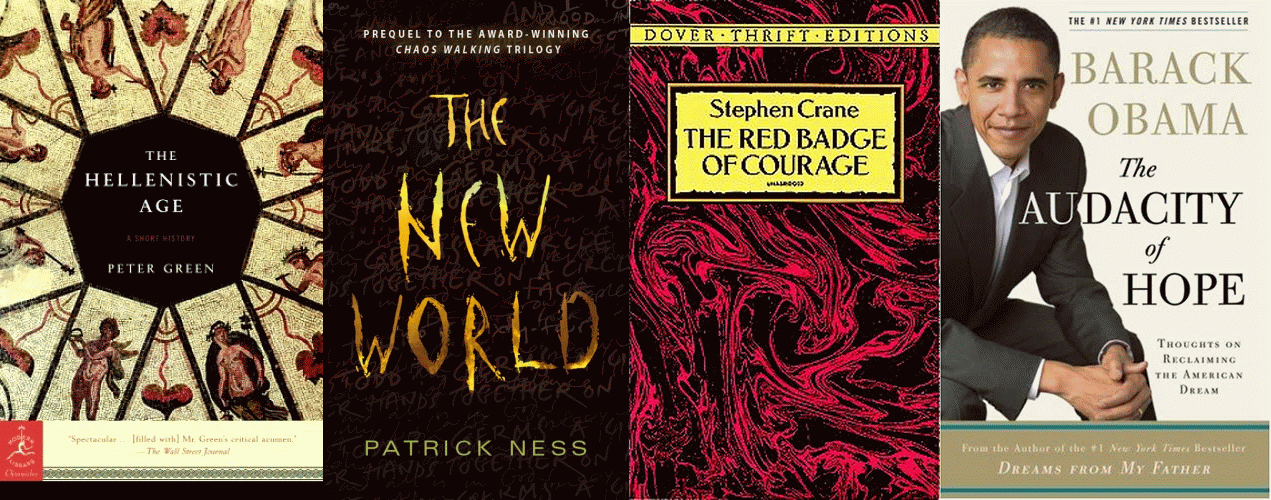
The Hellenistic Age by Peter Green, "The New World" by Patrick Ness, The Red Badge of Courage by Stephen Crane, and The Audacity of Hope by Barack Obama

The Dead that Walk edited by Stephen Jones, "They" by Vincent Hobbes, The Time Machine by H.G. Wells, The Zombie Survival Guide: Recorded Attacks by Max Brooks, and Blockade Billy by Steven King

Tuesday, December 27, 2011

The Zombie Survival Guide: Recorded Attacks (2009)

     Sure, I gave The Zombie Survival Guide (2003) as a Christmas present to a coworker many years ago – I want to say it was 2004 – but I never read it.  I glanced through it, but it didn't seem to hold much appeal for me.  For a book that was filed under humor, it seemed leaden.  Moreover, it felt lazy.  Now, I will own the fact that it irresponsible for me to come to those conclusions without actually reading at least one entire section of the book.  The person to whom I gave the book was happy with it, and author Max Brooks has gone on to have much success churning out more titles relating to the zombie apocalypse.  As I had an entire day free, I decided to give Brooks another shot – though this time in graphic novel form, as I was sure it would not take much time to get through it.
     That was an understatement.  The Zombie Survival Guide: Recorded Attacks (2009) features some compelling black and white artwork by Ibraim Roberson.  It is not expressive of action, but is detailed and moody.  Still, it cannot make up for the lack of anything resembling story in any of the vignettes Brooks half informs.  There isn't much in the way of connective material to link the stories, nor does Brooks do anything to make one believe he should be praised for his research in squaring his fantasies of sporadic outbreaks of the undead and actual history.
     The Zombie Survival Guide: Recorded Attacks feels more like an attempt to storyboard a mishmash of a film, where zombies could be incorporated into multiple eras.  Nothing in it is compelling on its own, and when taken together it just comes off as an attempt for Brooks to wring more money out of a genre that he doesn't seem to have added anything to.  Maybe I'm wrong.  Maybe in the full text of The Zombie Survival Guide and World War Z (2006), Brooks does make many and varied contributions to the genre beyond giving a name to the virus that creates his zombies.  But in my limited experience, Brooks offers nothing new and does so in an unimaginative manner.
     I cannot imagine that anyone would be satisfied with this product at its list price of $17.00 (though I doubt few buy their books at list price these days).  It is too short, too disjointed, and not distinctive enough to merit being necessary in any collection.  As a tie-in, it may satisfy a need for some fans to see Brooks' imagining of a world perpetually at risk of a zombie uprising play out over a 62,000 year span.  By itself, it only serves as a reminder of how many attempts to tell a zombie story with nothing behind it have plagued the foreign and direct-to-video film markets over the past decade.  I also think that Brooks did Roberson a disfavor by not listing the artist's name on the cover.
     Whether or not this completely turns me off to ever giving World War Z a chance – I think that most authors who are not graphic artists do not translate well into this medium – I know that I will continue to be leery of Brooks.  Having seen him on Deadliest Warrior (2009-present) and the Starz produced Zombie Mania (2008), I am filled with a sense that he is a man who is enamored with the idea of zombies but cannot find any voice to make the concept his own or structure the zombie apocalypse as to give it any kind of allegorical meaning.

Tuesday, November 15, 2011

Richard Castle's Deadly Storm: A Derrick Storm Mystery (2011)

     I cannot believe that Marvel retailed this at $19.99.  Or that people paid that amount for it.  Or that it is a hardcover graphic novel – the cover is as thick as the material between them.  On the subject of price, ABC seems to think that overcharging for materials that serve to promote their show (the Nikki Heat novels list at $19.99 to $25.99).  The show is available for free...sort of.  Factor in any cable or satellite charges versus viewing time and it might cost around $3 to watch a season – considerable cheaper than buying them on DVD or Blu-ray.
     See how I'm not diving into any kind of commentary on the material.  Maybe because it was so damnably subpar.  Never mind that it sets up a bad contradiction between the story and the mythology of the Derrick Storm novels as presented in the same book; there are always cheats an author can use to unmake a mistake.  There just isn't anything to the story.  There is little to no character development, just plugging types into the structure and letting expectations be met. 
     Most disappointing, the format wedges in a Castle hero relying on a strong female lead to direct and save him (something that was not supposed to be present in his fiction prior to being inspired by Det. Beckett...as my memory informs me from having seen the show from the get go, and I will admit that I may be mildly wrong).  There is nothing in the story that would make one believe that people would make it a best selling novel or spawn a successful series.  It feels very much like what I imagine my writing a mystery novel would be like – and that means not completely formed and full of guess work as to police (and governmental) procedures without any satisfactory endings to scenes involving them.  What's more, it then becomes hard to take the hero seriously when he needs help with everything but still is competent enough that everyone needs him to do what they can't.
     I did like the artwork, though.  Sure, it suffers from the very common comic book problem of occasional inconsistencies in how the characters look (I can't draw anything consistently, so I can appreciate how hard it must be), but it looks crisp and clean and imparts a good amount of movement without resorting to clichéd panels (it does once, and it feels very out of place).  I liked that it used typed lettering for Storm's inner monologue and regular handwritten lettering for the dialogue; it somehow felt right.  It doesn't hold a candle to my favorite graphic novels – but I fell in love with those in 1986 and the artist has since recolored them to lesser effect – but it comes close to being high quality. (As a total aside, it looks like I could sell my Elfquest graphic novels and pay all my expenses for three months.  That would never happen with Castle properties.)
     There isn't much here other than a quick diversion.  It doesn't really inform the show any better and it doesn't convince anyone that Richard Castle has a great imagination – a quality he is supposed to have.  The price is simply too high to justify this as a purchase.  Find a friend who forked over their hard earned cash or get a copy from the library if you are interested.  I believe in buying books when the value is right, but this would have to drop down to about $7.50 before that level would be found.

Wednesday, September 28, 2011

A Study in Scarlet [Graphic Novel] (2010)

     Say what you will, I have some inner need to either work in themes or to work towards completion when it comes to a body of written work.  In both these manners the graphic novel of Sir Arthur Conan Doyle's A Study in Scarlet (2010 for the graphic novel; 1886 for the original) fits as there is decidedly a theme this week of supporting the illustrated story and Conan Doyle's Memoirs of Sherlock Holmes were reviewed on 20 September, 2011.  Granted, reading the graphic novel will allow me to not have to pick up the original tale for some time, but it does give me the illusion of having read it.
     I do want to admit – in an ugly sort of way – that I greatly enjoyed being able to finish this in the span of about an hour, much faster than if I were reading the original.  Likewise, much of the needless description of unimportant details are left out as I.N.J. Culbard illustrates the scenes well and perhaps improves upon some of Conan Doyle's approaches to setting the scene.  Unfortunately, neither illustrator Culbard or "text adapter" Ian Edginton can do little to mask some of Conan Doyle's shortcomings when it comes to imagining characters.
     If you are like me – and not in all the bad ways – then you likely grew up with a level of admiration for Sherlock Holmes.  I mean, come on, he's the world's smartest man.  And he can handle himself in a fight.  And he solves crimes.  And stops international incidents from causing wars.  He is about as English a superhero as one could imagine, and he doesn't need to come from a distant planet or be bitten by a spider to get his powers.  But in reading through the stories, there is so much withheld from the reader that it makes it impossible to appreciate what Holmes is actually doing.  And the rest of the cast is usually so confused as to how to go about detective work that the only role they serve is for Holmes to explain what he has done – things hidden from the reader until the end.
     I kind of hate that kind of storytelling.  I think of it as the Henry Lopez school of building a mystery – never mind that Mr. Lopez is working in a different medium and more than a century after Conan Doyle – where surprises can be sprung simply because no information regarding them was ever offered in the first place.  Modern detective stories usually give more of an insight as to the work.  Even comedic approaches like USA's Psych (2006-whenever USA cancels it) show the actual observations, but retain the Holmesian wrap-up speach as to how the mystery was solved.  Shawn Spencer (James Roday), a modern super-observant detective, pretends to be psychic and hides behind humor rather than endlessly berating the police force for not picking up on every single clue.
Shawn Spencer and Guster Burton, Psych's answer to Holmes and Watson.  Less pretentiousness, more snarkiness.  And occasionally the detectives know more than they do.
     Back to A Study in Scarlet.  Conan Doyle gives a brief account of how Watson came to return to England and meet Holmes.  It feels very unsatisfactory, and it is hard to imagine how these two men could come to develop a strong sense of friendship.  Watson comes across as a dullard who is living off of a government settlement due to his injuries in the Battle of Maiwand (in Afghanistan).  Holmes seems like a self-important twat (in the British sense) who is only interested in someone with whom he can split the rent and bully with his intellect.
     As for the story, it actually is pretty imaginative.  Two men are killed and Scotland Yard does not know how to find the killer – and Conan Doyle actually treats the inspectors with a small amount of respect in regards to their thinking and methods.  Holmes stumbles around, insults people, goes missing for periods of time, and then announces he has determined who the murderer is, but needs to get him as to find out why.  That leads to a rather dull and lengthy tale of the motivation behind the killings.  However, we do learn that Watson can diagnose an aneurism simply by checking someone's pulse, so that is quite impressive.
Page 17, where Watson assesses Holmes
     The drawing style feels modern while still evoking a comfortable image of Victorian England.  I prefer how the cutaway scenes are handled to the main story, but both are well done.  The scenes move at a good clip, and the faces come across as emotive enough to get the job done.  The action – there isn't much – is a little lackluster in appearance, but maybe it is meant to be restrained to begin with.
     I think the asking price of $14.95 is kind of high.  I checked a copy of from the local library – at a cost of $0, which is always pretty solid.  Still, it isn't a price gouge.  And if one were really into all things Sherlock Holmes, this would make a fine addition to the collection.  It is also is probably a better means of introducing the characters to the younger set – especially if they can see this before the Guy Ritchie films –than the alternatives.

Tuesday, September 27, 2011

The Beast of Chicago: The Murderous Career of H.H. Holmes (2003)

     I would imagine that the average reader probably wants something different from an examination into the serial killer known as H.H. Holmes. I want more of an understanding of the motivations of the subject, and I want the details of the killings – because those inform the picture as well as anything else.  Being partially educated, I knew I probably wasn't going to get much in regards to the psychology of Holmes from a graphic novel, but that didn't mean there wouldn't be any appeal for me.
     Rick Geary's The Beast of Chicago: The Murderous Career of H.H. Holmes (2003) is noted on FEARnet.com as one of the five graphic novels one needs to read (provided one has already read The Walking Dead).  I definitely would not rank it that high, but I have not read any of their suggestions from that list, save the subject of this post.  It has some merit, but almost none of that seems tied to it being a graphic novel.
Geary's take on the second floor of the Castle
     In essence, Geary manages to turn what would be a somewhat dry four page paper on Holmes' travels, schemes, and possible actions – that part needed to be better researched – into a 70+ page collection of illustrated panels which add little to his text.  This is not a knock of Geary's skill; he is quite good.  It is just that there is so little action implied in his drawings that the illustrations do little to pace the narrative.  None of the horror of Holmes' acts carries into the artwork, but Geary does have a flair for conveying a sense of the late 19th Century.  Where the illustrations work best is in showcasing the look and layout of Holmes' Murder Castle, but I cannot say that these are more informative that the existent information already available.
Geary's presentation of the Castle's exterior
     Geary essentially gives a bare bones account of Holmes, noting his rise from being little Herman Webster Mudgett in New Hampshire to traveling across the country – and into Ontario, Canada – in an effort to perpetrate a fraud (and kill some people along the way).  There is no dramatic license in the narrative.  Indeed, Geary seems to go out of his way to make sure that he is well within the established facts – as far as he researched them – of the case.  Unfortunately, this leads to there being scant few panels where Geary can impart more than a stoic face, a street scene, or architecture.
More realistic depiction of the Murder Castle
     As a primer on Holmes, I think this book serves a purpose.  But I don't know if it does a better job than looking him up on Wikipedia (where this very graphic novel serves to inform the entry).  It takes surprisingly little time to read, which makes it a fine selection to check out from the library.  I just can't recommend it as a purchase, nor can I say it serves to better understand psychopathy or serial killing in general.  At the same time, it doesn't celebrate Holmes or killing, so it is better than some of the other titles in the same genre.